Red Light Therapy for ACL Tear: Phase-by-Phase Protocol

Red Light Therapy for ACL Tear: The pop is unmistakable. So is what follows — the swelling that arrives before you've left the field, the knee that feels like it belongs to someone else by morning, and then the long, grinding conversation with a surgeon about timelines, grafts, and what the next nine months look like. ACL recovery doesn't ease you in.
If you're reading this somewhere between diagnosis and return-to-sport, or stuck in a rehab phase that's moving too slowly, you've probably already been through the standard literature. You know the biology. You know the timeline. Now you're asking whether red light therapy is legitimate or just another thing someone's trying to sell to injured athletes.
Fair question. The answer is more specific — and more honest — than most of what's written about it.
Red light therapy, more precisely called photobiomodulation (PBM) or low-level laser therapy (LLLT) in clinical research, works by stimulating the mitochondria in injured tissue to produce more ATP, reducing the pro-inflammatory cytokine IL-1β in the joint capsule, and encouraging organized collagen deposition. All three matter for ACL recovery. None of them replace surgery or physiotherapy. But used consistently and at the right phase, PBM is a genuine adjunct — not a miracle, not a gimmick.
Here's what the evidence actually supports, and where it runs out.
- 1. Why ACL Recovery Is Harder Than Most Injuries
- 2. What Red Light Therapy Actually Does Inside the Knee
- 3. What the Research Shows for ACL Injuries Specifically
- 4. How to Use Red Light Therapy Through ACL Recovery — Phase by Phase
- 5. Why the Type of Device Matters for Knee Injuries
- 6. What Red Light Therapy Cannot Do
- 7. Combining Red Light Therapy With Other Recovery Strategies
- 8. Frequently asked questions (FAQs)
- 9. References
Why ACL Recovery Is Harder Than Most Injuries
Most soft tissue heals. The ACL is a notable exception.
Ligament tissue is sparsely vascularized — it receives far less blood supply than muscle or bone. After a tear, the repair process depends on cellular activity that's constrained from the start by poor circulation. Growth factors can't arrive efficiently. Inflammatory byproducts can't clear quickly. The healing environment is compromised before anything else goes wrong.
Then inflammation becomes its own problem. Acute inflammation immediately post-injury is necessary — it's the body's repair signal. But in a joint cavity, inflammation that lingers beyond the first few weeks stops being useful. Elevated IL-1β and TNF-α drive fibroblast activity that causes excess collagen deposition, capsule thickening, and progressive ROM loss — what clinicians call arthrogenic contracture, and what patients call the moment their knee stopped bending right.
What rarely gets mentioned early enough: the swelling also causes a secondary problem called arthrogenic muscle inhibition. Joint effusion overloads the mechanoreceptors around the knee, and the nervous system responds by inhibiting the quadriceps. The quad isn't wasting away from disuse — it's being actively suppressed by the brain in response to joint pressure. It's why patients come out of ACL reconstruction and can't fire their quad even when they try. This is a known and well-described phenomenon, and it's why early rehab is as much about clearing joint swelling as it is about any exercise prescription.
That context matters because it's exactly what PBM targets.
What Red Light Therapy Actually Does Inside the Knee
Photobiomodulation isn't a single effect — it's a cellular cascade triggered by specific wavelengths of light. For a deeper look at how red light therapy works across applications, the core mechanism is consistent; what varies is how relevant each downstream effect is for a given injury type.
For ACL recovery, four effects are worth understanding.

The Mitochondrial Pathway
Red and near-infrared light are absorbed by cytochrome c oxidase, an enzyme in the mitochondrial membrane that sits at the end of the electron transport chain. When photons reach this molecule — particularly at wavelengths between 630–670nm and 800–860nm — it triggers increased ATP production and reduced oxidative stress.
In healthy, well-vascularized muscle, that's a modest boost. For a fibroblast in ligament tissue already operating in a low-oxygen, nutrient-poor environment, it's more significant. It's the difference between cells that can actually do repair work and cells that are functionally idling. As Słuchocka et al. (2026, Quality in Sport) describe, PBM stimulates cytochrome c oxidase, increasing ATP production and modulating oxidative stress — the chain from which everything else follows.
Inflammation Control
PBM reduces pro-inflammatory cytokines — primarily TNF-α and IL-1β — while supporting anti-inflammatory signaling. Crucially, this is a modulating effect, not a blanket suppression. Unlike NSAIDs, which broadly dampen inflammation, PBM appears to help move the joint from acute to resolving inflammation rather than just quieting it.
For ACL recovery, that distinction matters. The drug-free pain management effect is secondary; the more clinically significant role is keeping prolonged joint inflammation from progressing into fibrosis.
Collagen Organization vs. Scar Tissue
Fibroblasts stimulated by PBM tend to deposit more organized collagen rather than disorganized scar. For ligament and tendon repair, that distinction is real — organized collagen, aligned along mechanical stress lines, is stronger and more elastic than scar. Worth being precise here though: PBM doesn't regenerate torn ACL fibers. A complete rupture won't grow back under any wavelength of light. What it supports is the quality of repair tissue being laid down at the graft site and in surrounding structures.
Blood Flow and the Supply Problem
Near-infrared light triggers nitric oxide release from endothelial cells, causing local vasodilation. PBM also supports angiogenesis — new capillary formation. Both are relevant for a tissue type that's chronically under-supplied. Better local perfusion means improved nutrient delivery and waste clearance in the periligamentous tissue, which is a meaningful advantage given how limited that supply chain already is.
What the Research Shows for ACL Injuries Specifically
The honest position: the mechanistic case is solid, the broader sports medicine evidence is credible, and one highly relevant study directly addresses the post-surgical ACL environment — though it was done in an animal model. Large human RCTs specific to red light therapy and ACL reconstruction don't exist yet. That's not a reason to dismiss what's there; it's a reason to describe it accurately.

The Key Study: LLLT and Post-Surgical Joint Contracture
The most directly relevant evidence comes from Kaneguchi et al. (2022), published in Physiological Research (PMID 35616040). The study applied LLLT at 830nm (150mW, 120 seconds per session) to rats after ACL reconstruction and measured effects on joint contracture and inflammatory markers.
The findings were clear: ROM loss — arthrogenic contracture — was significantly attenuated in the LLLT group. IL-1β gene expression in the joint capsule was significantly reduced at one week. The fibrotic changes typical of post-ACL reconstruction — upregulation of collagen type I and III, synovial shortening, capsule thickening — were present in untreated animals and attenuated in those receiving LLLT. Conclusion: LLLT may prevent arthrogenic contracture by inhibiting joint capsule inflammation and fibrosis.
Why this matters clinically: arthrofibrosis — pathological scar tissue formation inside the joint — occurs in roughly 4–10% of ACL reconstructions in published case series, with subclinical stiffness affecting a much broader group. Most patients don't know this complication exists until they're dealing with it. When it develops, treatment options are limited and often require a second procedure. The Kaneguchi study is among the first to show LLLT's potential preventive role here, and almost no consumer-facing content has engaged with it seriously.
The limitation is real: rat models don't map directly to human outcomes, and ideal dosimetry for clinical human application hasn't been established in a large RCT. The 830nm wavelength used falls within standard NIR clinical ranges, which supports its translational relevance, but that's not the same as a human trial.
Broader PBM Evidence in Sports Medicine
A 2026 review by Słuchocka et al. in Quality in Sport (DOI 10.12775/QS.2026.53.69750) found that PBM across sports medicine applications produces reduced muscle fatigue, accelerated bone and tendon repair, neuroprotective effects, and significant reduction in chronic inflammatory markers. PBM isn't fringe — it's an established recovery adjunct in sports medicine, with ACL recovery among its more mechanistically supported applications.
For those wanting to dig into the clinical evidence for photobiomodulation directly, the evidence base covers musculoskeletal injury, tendinopathy, and surgical recovery broadly.
The Honest Gaps
No large-scale human RCT exists specifically for red light therapy and ACL reconstruction. The strongest data comes from adjacent musculoskeletal applications — tendinopathy, osteoarthritis, post-surgical recovery — with mechanistic and animal data filling the ACL-specific gap. That's a credible but incomplete picture, and it's worth being straight about that.
How to Use Red Light Therapy Through ACL Recovery — Phase by Phase
"Use it during recovery" isn't guidance. The biology changes substantially across a 9–12 month ACL timeline, and so does what PBM can actually contribute.

Before Surgery (Pre-Hab)
If you're scheduled for ACL reconstruction with a 2–6 week window before the procedure, this is probably the most underused application of PBM. Pre-operative joint inflammation — the swelling, heat, and effusion that accumulate after the initial injury — can affect surgical outcomes. Going into reconstruction with a calmer joint capsule reduces the inflammatory burden the procedure adds.
Three to five sessions per week, 10–15 minutes, applied directly to the knee. No incision to work around. For those managing a partial ACL tear conservatively, this isn't prep for surgery — it's the protocol itself.
Phase 1 — Acute and Post-Surgical (Days 1–14)
The highest-inflammation window. Haemarthrosis, post-operative swelling, and the body's repair response are all running at once. Pain and effusion are limiting range of motion and driving the arthrogenic inhibition that's shutting down the quad.
PBM can help modulate early inflammation, but wait for surgical clearance before applying near the incision. Once sutures or staples are out and the wound is closed — typically 10–14 days post-op — treatment around the knee joint is appropriate. Before that, applying to the quadriceps above the incision can still support the muscle and address inhibition indirectly.
Daily or every-other-day sessions, 10–15 minutes. Conservative frequency, consistent application.
Phase 2 — Early Rehab (Weeks 2–6)
This is the window where PBM earns the most. The acute inflammatory peak has passed, but the risk of transitioning from productive inflammation to fibrosis is at its highest. The Kaneguchi (2022) findings are most directly applicable here: keeping IL-1β-driven fibrotic changes in the joint capsule from taking hold.
Apply before physiotherapy sessions to improve tissue pliability; apply after to manage post-exercise soreness and reduce local inflammatory accumulation. Five to six sessions per week. ROM progress in early ACL rehab isn't linear — when it stalls unexpectedly, low-grade capsular fibrosis is often a contributor worth addressing.
Phase 3 — Progressive Loading (Months 2–6)
The long middle. Quad strengthening, single-leg work, proprioception training — months of effort with modest visible progress. The graft is undergoing ligamentization, slowly remodeling into functional ligament tissue over 9–12 months. PBM here supports collagen maturation and manages the chronic low-grade inflammation that builds with intensive training loads. Three to four sessions per week, typically post-training or on recovery days. It fits naturally alongside the post-exercise recovery stack — sleep, protein, load management.
Phase 4 — Return-to-Sport (Months 6+)
Running, cutting, plyometrics. The knee is taking real sport-specific load for the first time. At this stage PBM functions mainly as a recovery tool — managing the soreness and low-grade inflammation from repeated high-load sessions. Two to three sessions per week is plenty. The heavy lifting, so to speak, has already been done.
Why the Type of Device Matters for Knee Injuries
A flat red light panel works well for large, flat surfaces — the back, chest, broad muscle groups. It works poorly for a knee, and the reason is physics rather than opinion.
Irradiance — the amount of light energy delivered to tissue — drops off with both distance and angle of incidence. A panel held 10–15cm from a curved joint delivers inconsistent energy to the medial, lateral, and posterior aspects of the knee. The treatment geometry doesn't fit the anatomy.
A flexible, wearable device that wraps around the joint solves both problems. Contact-based application eliminates the distance variable, and the conformable design reaches the joint capsule and surrounding structures consistently. For knee and joint recovery, that geometry matters.
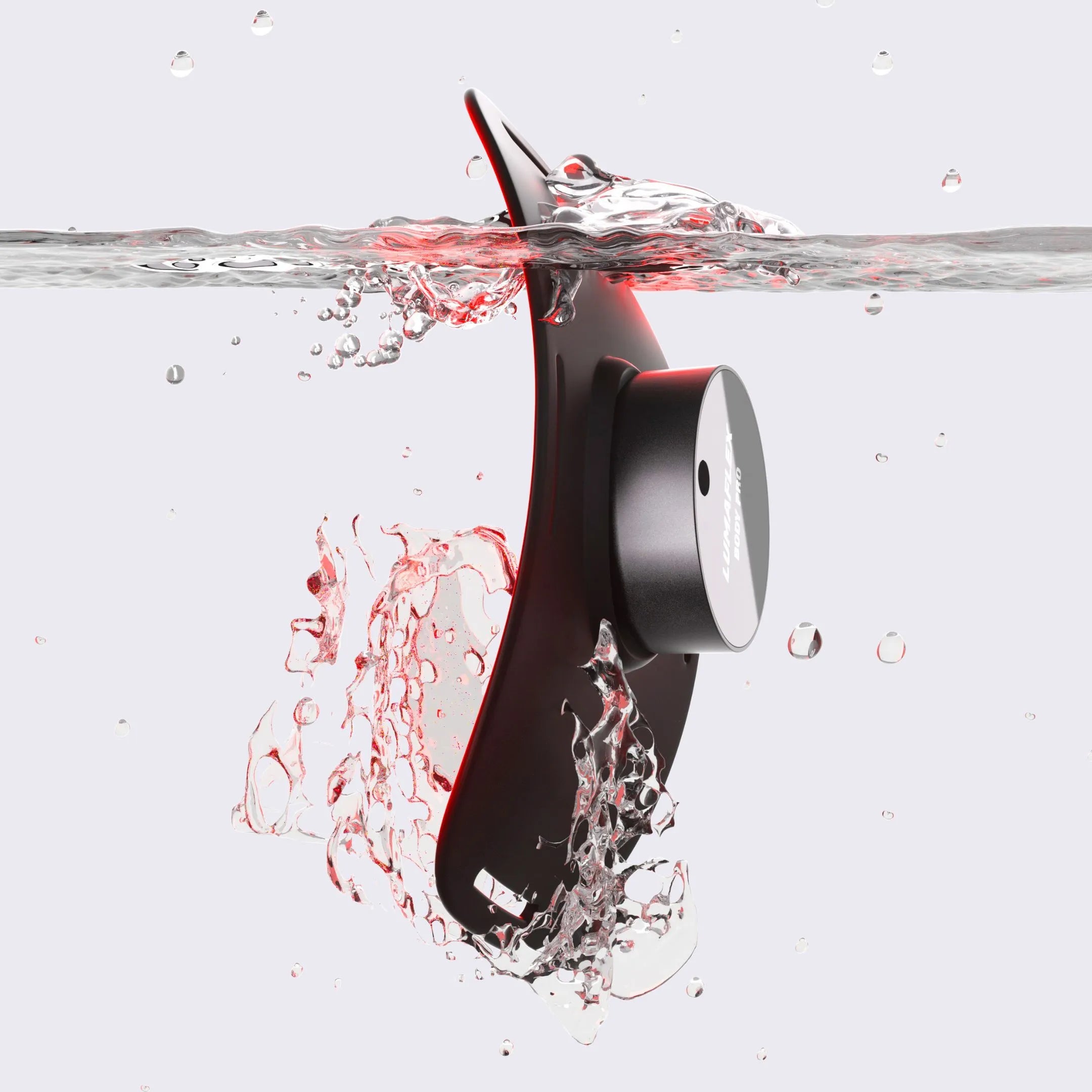
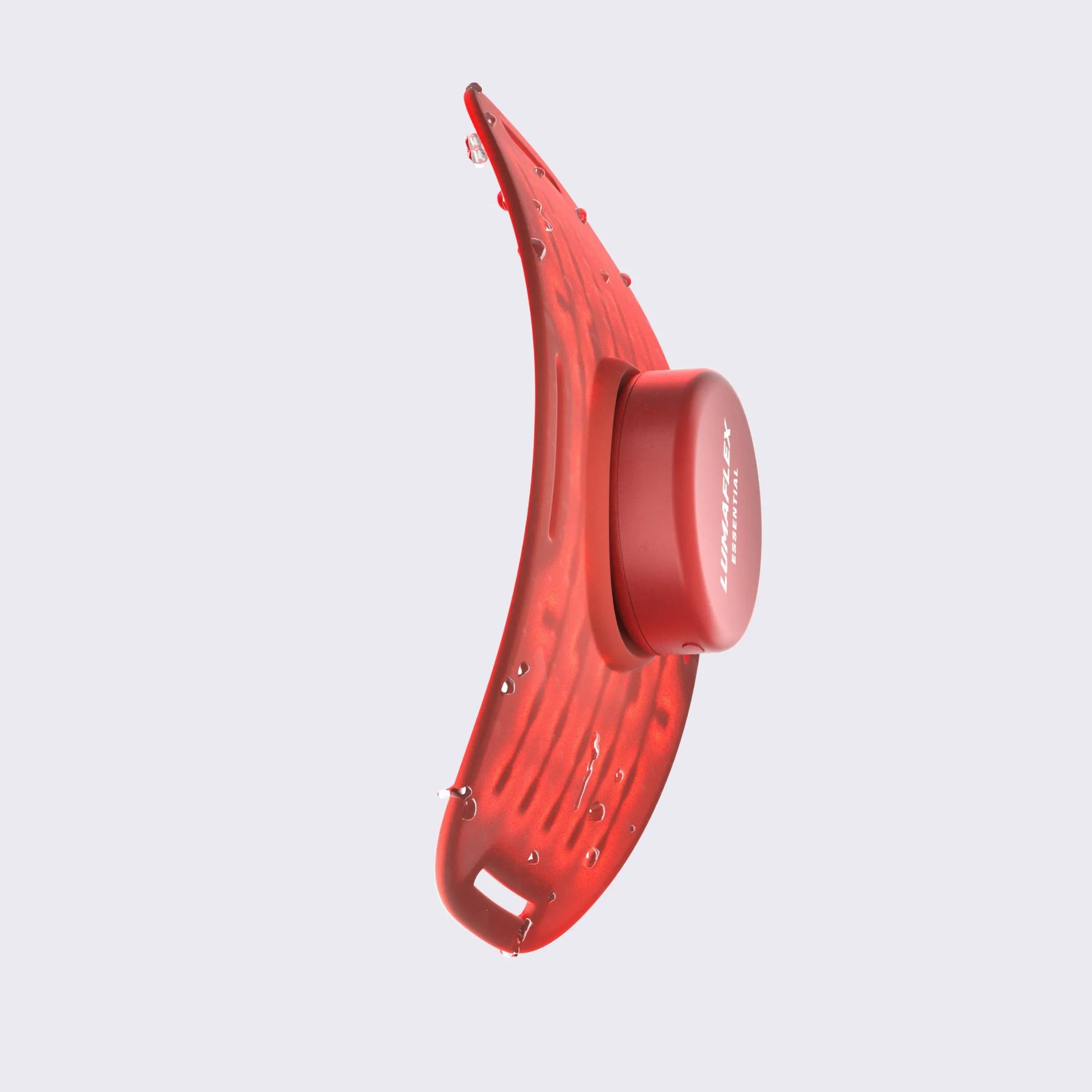
Wavelength selection is equally important. For ACL recovery, dual-wavelength coverage — red light in the 630–660nm range for periarticular anti-inflammatory effects, combined with NIR around 830–850nm for deeper joint capsule and ligament penetration — addresses both surface and depth. The Lumaflex Body Pro and Essential Pro are built around this principle: flexible, FDA-cleared, wearable devices that wrap around the knee and deliver both wavelengths. For a joint injury, the conformable design is the clinically logical choice — that's not marketing language, it's just how light delivery works.
What Red Light Therapy Cannot Do
Red light therapy cannot regenerate a completely torn ACL. A Grade III rupture requires surgical reconstruction for any patient wanting to return to pivoting or sport. No wavelength or device changes that.
It's not a replacement for physiotherapy and progressive loading. The cellular conditions PBM supports — ATP availability, collagen organization, inflammation resolution — are prerequisites for repair, not substitutes for the mechanical stimulus that actually drives tissue adaptation. Load is required for strengthening. Movement is required for proprioception. PBM creates a better environment for that work; it doesn't do the work.
And no device compensates for poor sleep, inadequate protein, or chronic stress. ACL recovery is systemic. PBM is one input among several that matter.
Combining Red Light Therapy With Other Recovery Strategies
PBM pairs logically with the other things that serious rehab involves.
Structured physiotherapy and PBM aren't competing approaches — reduced pain and improved tissue pliability from PBM tend to make physio sessions more productive. PRP (platelet-rich plasma), increasingly used in ACL recovery particularly for partial tears, delivers concentrated growth factors to the injury site; PBM appears to enhance cellular uptake of those factors, making the combination mechanistically sensible even if large human trials on the pairing are still limited.
Sleep remains the most underrated variable in recovery. Growth hormone release, protein synthesis, and collagen remodeling all peak during deep sleep. PBM doesn't interfere with sleep; reduced pain often improves it. That's worth noting.
Can red light therapy heal a completely torn ACL without surgery?
No. A Grade III ACL rupture requires surgical reconstruction for return to pivoting activities or sport. PBM supports the tissue environment but cannot regenerate a severed ligament. For partial tears managed conservatively, it's a more relevant intervention.
When can I start using red light therapy after ACL surgery?
Wait until the incision is fully closed — typically once sutures or staples are removed around 10–14 days post-op. Before that, you can apply to the quadriceps above the wound. Check with your surgeon before starting any adjunct in the acute post-surgical period.
What wavelength works best for ACL recovery?
Dual-wavelength coverage — red around 630–660nm plus NIR around 830–850nm — addresses both superficial periarticular inflammation and the deeper joint capsule tissue. The Kaneguchi (2022) study used 830nm and found significant effects on capsular inflammation and fibrosis at that wavelength.
How often should I use it during rehab?
Daily or near-daily in the first six weeks; three to five sessions per week during progressive loading; two to three sessions per week at return-to-sport. Consistency across the timeline matters more than pushing frequency in any one phase.
Can it prevent joint stiffness after surgery?
Based on Kaneguchi (2022), LLLT at 830nm significantly attenuated the fibrotic changes — collagen I and III upregulation, synovial shortening, capsule thickening — that drive post-surgical contracture. Weeks 2–6 is the window where this preventive effect is most relevant.
Does it reduce swelling?
Indirectly. PBM's anti-inflammatory effects support resolution of joint effusion, which in turn reduces arthrogenic muscle inhibition — the mechanism that's preventing the quad from firing.
Managing ACL recovery and want to see how Lumaflex fits the protocol? The Clinical Trials page has more on the underlying science, and the Lumaflex Academy goes deeper on PBM research across injury types.
References
Kaneguchi, A., Ozawa, J., Minamimoto, K., & Yamaoka, K. (2022). Low-Level laser therapy attenuates arthrogenic contracture induced by anterior cruciate ligament reconstruction surgery in rats. Physiological Research, 71(3), 389–399. https://doi.org/10.33549/physiolres.934796
Słuchocka, J., Lewalski, T., Florczyk, M., Płuciennik, L., Lewalski, O., & Jeruć, K. (2026). Red Light Revolution: Harnessing photobiomodulation for peak athletic performance and systemic healing. Quality in Sport, 53, 69750. https://doi.org/10.12775/qs.2026.53.69750
Sunku, N. N., & Sunku, N. N. (2026). Red light therapy for ACL tear: What the evidence says and how it fits your recovery. Dr. Nitin N Sunku. https://www.drnitinsunkuortho.com/blog/red-light-therapy-for-acl-tear